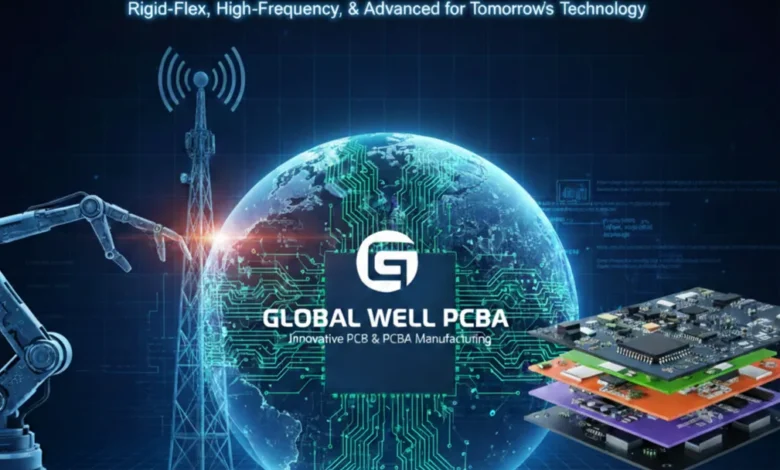
The electronics industry continues to evolve at a rapid pace, driven by increasing demands for miniaturization, high-speed communication, automation, and system integration. At the core of this technological transformation lies the printed circuit board (PCB), the structural and electrical backbone of nearly every modern electronic device.
From telecommunications infrastructure to robotics systems, high-performance PCB fabrication and precision PCB assembly have become essential for ensuring reliability, signal integrity, and long-term durability. Manufacturers capable of delivering advanced solutions such as Rigid-Flex PCBs and High Frequency PCBs play a crucial role in supporting next-generation innovation.
Table of contents
- The Foundation of Modern Electronics PCB Fabrication
- PCB Assembly: Precision and Reliability
- Rigid-Flex PCBs: Enhancing Design Flexibility
- High Frequency PCBs for Telecommunications
- Electronic Components and Signal Integrity
- Applications in Telecommunications
- Applications in Robotics and Automation
- The Importance of Technical Expertise in PCB Manufacturing
- Conclusion
- FAQs
The Foundation of Modern Electronics PCB Fabrication
PCB fabrication is a highly controlled process that involves converting circuit designs into functional bare boards. It includes material selection, copper layering, drilling, plating, etching, solder mask application, and surface finishing.
Today’s advanced applications require far more than standard FR-4 boards. Engineers must account for signal integrity, thermal management, electromagnetic compatibility, and mechanical stress resistance. High-density interconnect (HDI) designs, multilayer stack-ups, and microvias are now common in compact electronic systems.
In industries like telecommunications, where high-speed data transmission is critical, even minor design flaws can result in signal loss or interference. This is why precision fabrication, strict quality control, and advanced material expertise are essential.
PCB Assembly: Precision and Reliability
While fabrication creates the board structure, PCB assembly (PCBA) transforms it into a functional electronic unit. This process includes component placement, soldering, inspection, and functional testing.
Surface Mount Technology (SMT) and Through-Hole Technology (THT) are widely used depending on design requirements. Automated pick-and-place machines ensure high accuracy, especially in dense multilayer designs.
A key aspect of assembly is selecting appropriate electronic components and interconnect elements. Small mechanical details such as connectors and PCB pins significantly impact overall system performance. For a deeper technical breakdown of design considerations and types of PCB pins used in modern assemblies, engineers often refer to resources like this comprehensive guide on PCB pins available at globalwellpcba.com.
Proper interconnection ensures mechanical stability and reliable electrical conductivity, particularly in applications exposed to vibration or thermal cycling.
Rigid-Flex PCBs: Enhancing Design Flexibility
Rigid-Flex PCBs combine rigid board sections with flexible circuits in a single integrated structure. This hybrid approach allows engineers to reduce connectors, minimize wiring complexity, and improve space efficiency.
In robotics systems, for example, compact control modules must withstand constant motion and mechanical stress. Rigid-Flex PCBs provide improved durability and eliminate potential failure points associated with separate interconnect cables.
Additionally, these boards enhance reliability in aerospace and telecommunications applications, where signal continuity and structural integrity are essential.
High Frequency PCBs for Telecommunications
High Frequency PCBs are specifically designed to support signals operating in the MHz to GHz range. These boards use specialized materials such as PTFE-based laminates or low-loss substrates to reduce dielectric loss and maintain signal clarity.
Telecommunication infrastructure, including 5G base stations and RF communication devices, depends heavily on high-frequency circuit boards. Maintaining controlled impedance, minimizing signal attenuation, and reducing electromagnetic interference are critical engineering challenges in this sector.
Manufacturers capable of producing precision-controlled stack-ups and maintaining tight tolerances provide a competitive advantage in these advanced applications.
Electronic Components and Signal Integrity
The selection and integration of electronic components play a decisive role in overall system reliability. From micro controllers and RF modules to passive components and connectors, each element must align with the board’s electrical and mechanical requirements.
Signal integrity depends on trace routing, grounding strategies, impedance control, and connector placement. Poorly designed layouts can introduce noise, cross-talk, and thermal issues.
This is especially important in robotics applications, where real-time processing and sensor data transmission require stable and uninterrupted communication pathways.
Applications in Telecommunications
Telecommunications systems demand high-density multilayer boards, advanced RF capabilities, and strict quality standards. Applications include network routers, switching systems, satellite communication modules, and 5G infrastructure hardware.
In these systems, high-speed data transmission and minimal latency are critical. PCB manufacturers must ensure precise impedance control, effective heat dissipation, and robust mechanical support.
Advanced fabrication capabilities, including HDI technology and high-frequency material processing, enable reliable performance under demanding operational conditions.
Applications in Robotics and Automation
Robotics systems integrate motion control, sensor processing, artificial intelligence modules, and power management circuits within compact form factors. These systems require PCB that can endure vibration, temperature fluctuations, and repetitive mechanical stress.
Rigid-Flex PCB offer structural advantages by reducing the need for connectors and cables, which are common failure points in dynamic environments. High-reliability solder joints and durable PCB pins further enhance long-term stability.
Precision assembly ensures that components remain secure and functional even under continuous motion.
The Importance of Technical Expertise in PCB Manufacturing
As electronics become more complex, the margin for error continues to shrink. Manufacturers must combine advanced fabrication technology, experienced engineering teams, and comprehensive testing protocols.
Automated Optical Inspection (AOI) X-ray inspection, functional testing, and strict quality control standards are no longer optional they are essential.
Working with a PCB and PCB A manufacturer that understands advanced materials, multilayer designs, high-frequency performance, and mechanical durability ensures that end products meet industry standards and regulatory requirements.
Conclusion
Printed circuit board fabrication and PCB assembly form the foundation of modern electronics innovation. As industries like telecommunications and robotics continue to demand higher performance, manufacturers must provide advanced solutions such as Rigid-Flex PCBs and High Frequency PCBs.
Attention to component integration, interconnect reliability, and signal integrity defines the difference between a functional system and a high-performance one. With increasing design complexity and tighter performance requirements, partnering with experienced PCB manufacturers becomes a strategic advantage in building reliable and future-ready electronic products.
FAQs
What are PCB pins and why are they important?
PCB pins provide secure electrical connections between components and the board, ensuring signal integrity and mechanical reliability in high-performance electronics.
What is the difference between Rigid-Flex and traditional PCBs?
Rigid-Flex PCBs combine flexible and rigid sections, offering better durability, reduced connectors, and space-saving designs compared to standard rigid boards.
How do High-Frequency PCBs improve telecommunications systems?
High-Frequency PCBs use specialized materials to minimize signal loss, maintain impedance control, and reduce interference, enabling faster and clearer data transmission.
How does precise PCB assembly enhance robotics application?
Accurate PCB assembly ensures components are securely mounted, maintains signal stability, and allows boards to withstand motion and thermal stress in robotic systems.