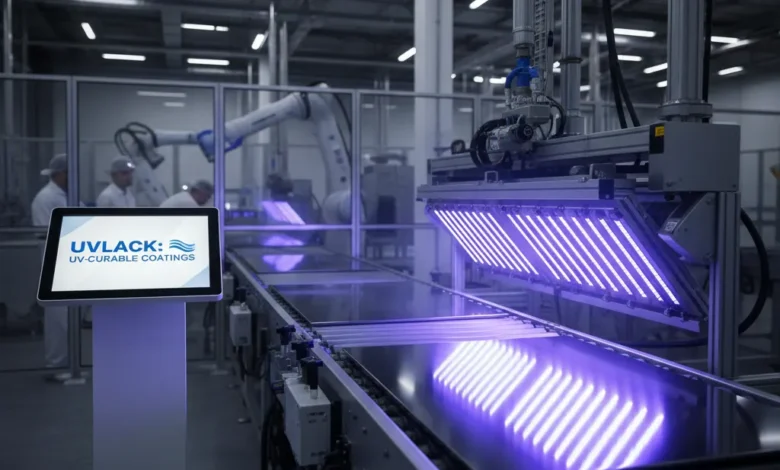
Uvlack, also known as UVLack or UV-curable coating, is a modern surface finishing technology commonly used in manufacturing today. It provide fast curing, high durability, and a premium finish across many industries. This Tchnology use in furniture and packaging to electronics and automotive parts. It has become an essential solution for businesses that need speed, quality, and environmental efficiency.
This guide explains what Uvlack is, how it works, where it is used, and why it matters in modern industrial production.
Table of contents
- What Is Uvlack? Meaning and Professional Definition
- How Uvlack Technology Works
- Step-by-Step Uvlack Application Process
- Key Features and Characteristics of Uvlack Coatings
- Major Applications of Uvlack Across Industries
- Environmental Advantages of Uvlack Technology
- Uvlack vs Traditional Coating Methods
- Advantages and Limitations of Uvlack
- How to Choose the Right Uvlack for Your Needs
- Safety Compliance and Regulatory Considerations
- Costs, Efficiency, and ROI of Using Uvlack
- Future Trends and Innovations in Uvlack Technology
- Why Uvlack Matters in Modern Manufacturing and Design
- Conclusion
- FAQs
What Is Uvlack? Meaning and Professional Definition
Uvlack is a UV-curable liquid coating that hardens instantly when exposed to ultraviolet (UV) light. Unlike traditional coatings that dry through evaporation or heat cures through a photochemical reaction.
In simple terms, once UV light hits the coating, it becomes solid within seconds. This process creates a strong, smooth, and scratch-resistant surface.
This is widely use by Professionals because it improves productivity, reduces waste, and produces a consistent high-quality finish.
How Uvlack Technology Works
Uvlack technology is based on UV curing, which is a process that use ultraviolet radiation which brings chemical changes in bonding inside the coating.
Key Components of UV-Curable Coatings
- Oligomers – Provide strength and durability
- Monomers – Control viscosity and flexibility
- Photoinitiators – React to UV light and start curing
- Additives – Improve gloss, adhesion, and resistance
When UV light activates the photoinitiators, the coating instantly transforms from liquid to solid.
Step-by-Step Uvlack Application Process
Applying these steps for precise and efficient workflow.
Surface Preparation
The surface must be clean, dry, and free from dust, oil, or moisture. Proper preparation ensures strong adhesion.
Application
The coating is applied using rollers, spray systems, or curtain coaters, depending on the material and production scale.
UV Curing
The coated surface passes under UV lamps. The curing happens in seconds, with no waiting time.
Inspection and Finishing
The final surface is checked for gloss, hardness, and uniformity. Minor finishing may be done if needed.
Key Features and Characteristics of Uvlack Coatings
Uvlack coatings offer several performance benefits:
- Instant curing
- High scratch and abrasion resistance
- Excellent gloss and clarity
- Strong chemical resistance
- Uniform thickness
- Long-lasting surface protection
These features make Uvlack ideal for high-volume and precision manufacturing.
Major Applications of Uvlack Across Industries
Furniture and Wood Finishing
It is commonly used on furniture panels, cabinets, doors, and flooring. It provides a smooth, glossy finish while protecting against wear and moisture.
Printing and Packaging
In the packaging industry, Uvlack improves visual appeal and protects printed surfaces on cartons, labels, and magazines.
Electronics and Industrial Equipment
It coatings protect electronic components from dust, corrosion, and minor chemical exposure.
Automotive Industry
Interior trims, plastic parts, and decorative elements use Uvlack for durability and premium appearance.
Consumer Goods and Product Design
Household items, decorative products, and accessories benefit from Uvlack’s clean finish and long lifespan.
Environmental Advantages of Uvlack Technology
Uvlack is considered an eco-friendly coating solution.
- Low or zero VOC emissions
- No solvent evaporation
- Reduced energy consumption
- Less production waste
Because curing is instant, factories save energy and improve air quality compared to traditional coatings.
Uvlack vs Traditional Coating Methods
Traditional coatings rely on air drying or heat curing, which can take hours. Uvlack cures instantly under UV light.
Key differences include:
- Faster production speed
- Higher surface durability
- Lower environmental impact
- More consistent quality
This makes a preferred choice in modern manufacturing environments.
Advantages and Limitations of Uvlack
Advantages
- Extremely fast curing
- High-quality finish
- Long-lasting protection
- Environmentally safer
- Suitable for automation
Limitations
- Higher initial equipment cost
- Requires UV curing systems
- Limited penetration on very thick layers
Despite these limitations, long-term efficiency often outweighs initial investment.
How to Choose the Right Uvlack for Your Needs
Choosing the right Uvlack depends on:
- Substrate material (wood, plastic, metal)
- Required gloss level
- Indoor or outdoor use
- Chemical and scratch resistance needs
- Production speed
Consulting suppliers and testing samples is always recommended before large-scale use.
Safety Compliance and Regulatory Considerations
The systems must follow safety standards:
- UV shielding for workers
- Protective eyewear and gloves
- Proper ventilation
- Compliance with industrial coating regulations
When used correctly it is safe and reliable in industrial settings.
Costs, Efficiency, and ROI of Using Uvlack
Although the equipment can be expensive at first, the return on investment (ROI) is strong.
- Faster production cycles
- Lower labor costs
- Reduced rework
- Energy savings
Many manufacturers recover costs quickly through increased efficiency and output quality.
Future Trends and Innovations in Uvlack Technology
The future of Uvlack includes:
- LED UV curing systems
- Improved outdoor durability
- Bio-based UV coatings
- Smart coatings with enhanced protection
As sustainability and automation grow, Uvlack technology will continue to evolve.
Why Uvlack Matters in Modern Manufacturing and Design
Uvlack supports modern manufacturing goals: speed, quality, and sustainability. It allows manufacturers to meet high design standards while reducing environmental impact.
From industrial production lines to premium consumer goods, Uvlack plays a key role in today’s competitive market.
Also Read: Stormuring Explained
Conclusion
Uvlack is a powerful coating technology that improves efficiency, durability, and environmental performance. While it requires specialized equipment, its long-term benefits make it a smart investment for modern industries.
For manufacturers looking to upgrade surface finishing processes, it is not just an option—it is a future-ready solution.
FAQs
Is this safe for everyday products?
Yes, when properly cured, it is safe for daily use items.
Can Uvlack be used outdoors?
Some Uvlack formulations are designed for outdoor use, but UV stability must be considered.
How long does it last?
With proper application, it can last many years without degradation.
Does Uvlack discolor over time?
High-quality Uvlack resists yellowing better than traditional coatings.
How it is different from varnish or laminate?
Uvlack cures instantly with UV light, while varnish and laminate rely on slower processes.