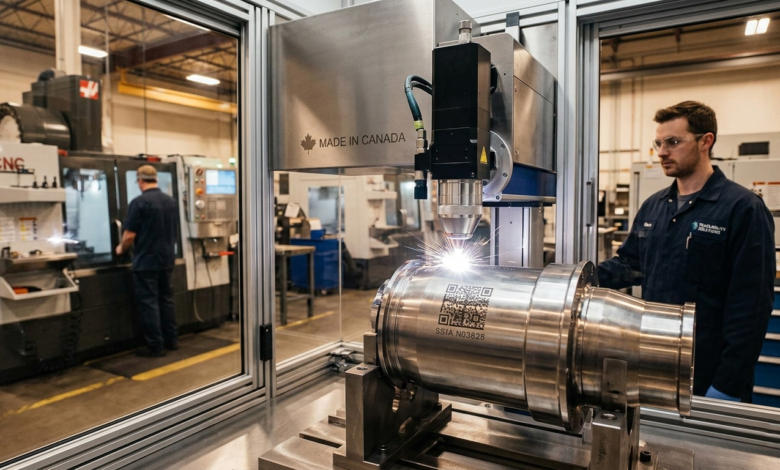
In the modern Canadian manufacturing landscape, precision and accountability are no longer optional—they are prerequisites for competition. Whether you are producing aerospace components in Montreal, medical devices in the GTA (Greater Toronto Area), or heavy machinery parts in Alberta, traceability is the backbone of your quality assurance, safety compliance, and supply chain integrity.
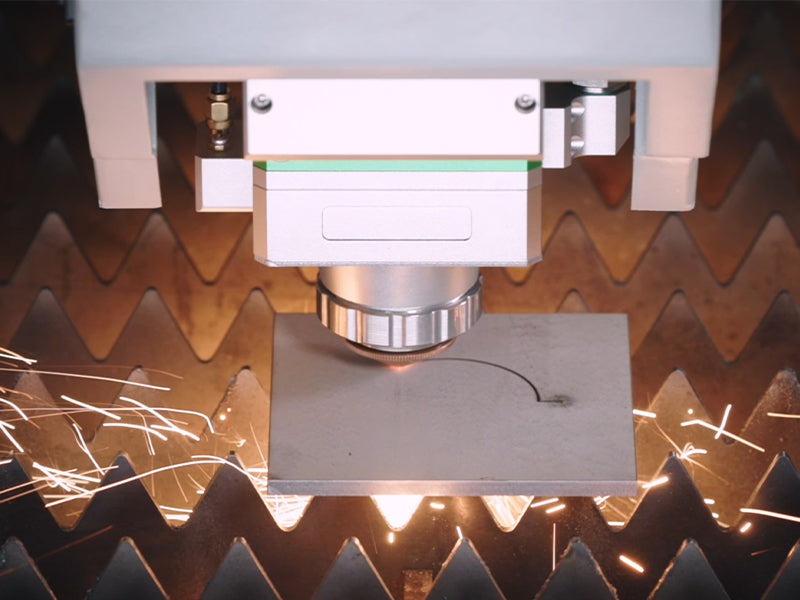
As global standards tighten and the “Made in Canada” brand continues to represent premium quality, laser marking has emerged as the gold standard for permanent part identification. This guide explores how laser technology is revolutionising traceability across the Great White North and how you can implement it in your facility.
What is Traceability and Why Does It Matter?
Traceability is the ability to track a component throughout its entire life cycle—from the raw material stage through production and distribution, and even into its eventual service life.
For Canadian manufacturers, traceability is driven by three critical factors:
- Regulatory Compliance: Meeting ISO standards and industry-specific regulations, such as Health Canada requirements for medical devices or Transport Canada standards for automotive parts.
- Liability & Safety: In the event of a product failure, precise traceability allows for “surgical” recalls of specific batches, rather than catastrophic, all-encompassing ones that could bankrupt a business.
- Process Optimisation: Data-rich marking (such as QR codes) helps plant managers identify bottlenecks on the shop floor in real-time, supporting “Lean Manufacturing” and “Industry 4.0” initiatives.
Why Laser Marking? The Advantages Over Traditional Methods
Historically, many Canadian workshops relied on inkjet printing or dot peen marking. However, laser marking has become the preferred choice for several key reasons:
1. Permanent & Indelible Marks
Unlike ink, which can smudge, fade, or be stripped away by industrial solvents, a laser mark is part of the material itself. It withstands the extreme temperature fluctuations of the Canadian climate, chemical cleaning, and years of heavy wear.
2. High Precision & Contrast
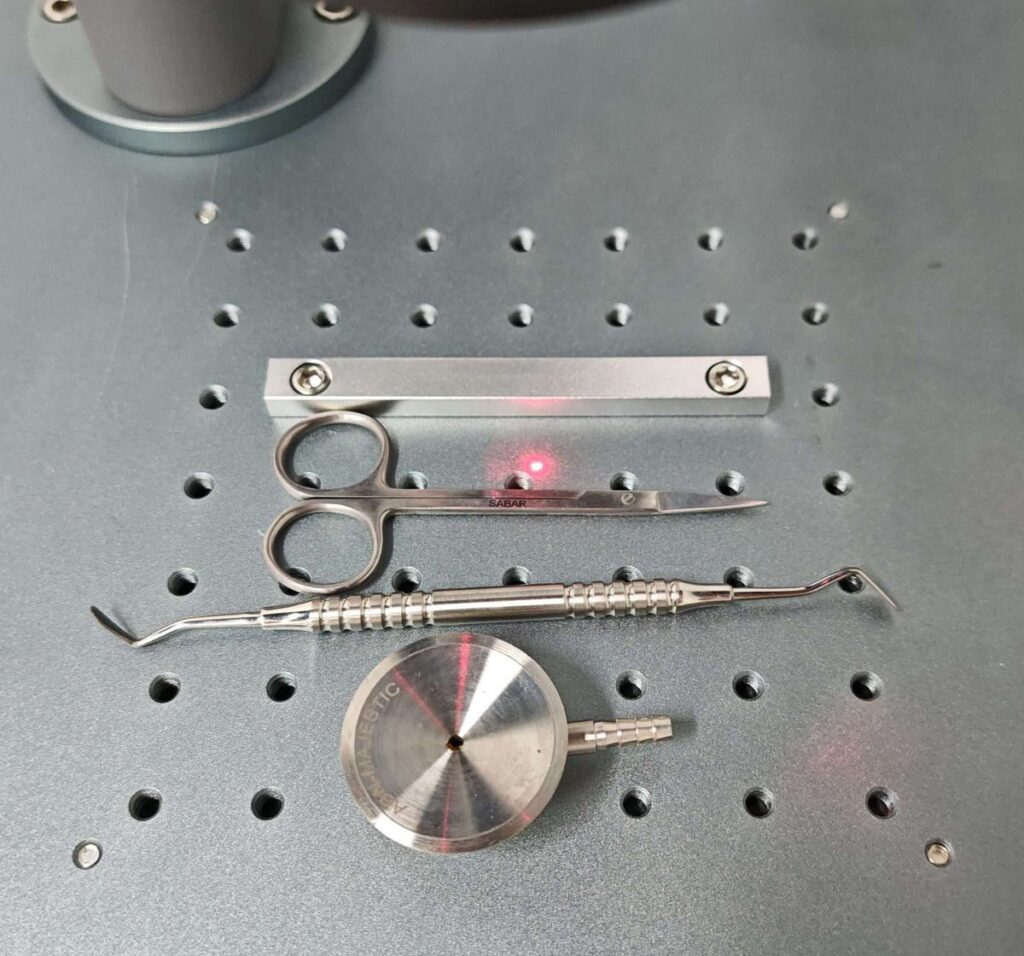
Lasers can produce high-density Data Matrix codes in incredibly small spaces. This is essential for the electronics sector or surgical instrument manufacturing, where space is limited but data requirements—such as Unique Device Identification (UDI)—are high.
3. Non-Contact & Stress-Free
Unlike dot peen marking, which mechanically strikes the material, lasers use heat. This “non-contact” process is ideal for fragile parts or high-precision aerospace components where mechanical stress could compromise structural integrity or lead to micro-fractures.
4. Cost-Efficiency & Sustainability
Laser systems require no consumables (like ink, ribbons, or chemicals) and very little maintenance. For Canadian businesses aiming for “Net-Zero” sustainability targets, the lack of chemical waste and reduced energy consumption is a significant advantage.
Common Laser Marking Technologies
Choosing the right laser depends entirely on the material you are marking:
- Fibre Lasers: The workhorse for metals (stainless steel, aluminium, titanium). Widely used in Canada’s automotive and tool-and-die sectors.
- CO2 Lasers: Best for organic materials like wood, glass, ceramics, and many plastics.
- UV Lasers: Known as “cold marking” lasers, these are perfect for sensitive plastics and medical-grade materials where heat damage must be avoided to maintain sterility.
Step-by-Step: Implementing Traceability in Your Facility
Step 1: Define Your Data Requirements
What do you need to track? Common data requirements include:
- Serial numbers and Batch numbers.
- Dates of manufacture.
- 2D Data Matrix or QR codes (which can store significantly more data than a standard linear barcode).
Step 2: Material Testing
Canadian manufacturers use a vast range of alloys and composites. Before full-scale production, perform a test mark to ensure high contrast and readability. A mark that an industrial scanner cannot read is useless for traceability.
Step 3: Systems Integration
Modern laser markers, such as those from OMTech, feature software compatibility that allows them to be integrated directly into your ERP (Enterprise Resource Planning) or MES (Manufacturing Execution System). This automates the serialisation process, removing the risk of human error.
Traceability Standards to Know in Canada
- ISO 9001: The baseline for quality management systems across all Canadian provinces.
- GS1 Canada Standards: Globally recognised standards for barcodes and identification, widely used in the healthcare and retail supply chains.
- AS 9100: The critical standard for the aerospace industry, particularly vital for the massive aerospace cluster in Quebec.
Traceability is no longer just a “value-add”—it is a requirement for doing business in a high-tech global economy. For Canadian manufacturers, investing in laser marking technology is an investment in your brand’s reputation and operational security.
By switching to laser marking, you ensure that every part leaving your facility carries a permanent digital fingerprint that remains legible through the toughest industrial conditions, from the shop floor to the end-user.